
Services
We provide a full spectrum of clinical and diagnostic evaluations along with complete thorough and detailed reports. We accept Medicare most HMO’S and PPO insurance. We also specializing in Personal Injury.
Comprehensive, Personalized Neurological Care
Neurology
Neurologists are principal care providers or consultants to other physicians. When a patient has a neurological condition which requires frequent care, the neurologist is often the principal care provider. Patients with MS, Parkinson’s or Alzheimer’s disease typically use their neurologist as their primary care physician. In a consulting role, a neurologist will diagnose and treat a neurological disorder and then advise the primary care physician, accordingly.
Disorders and Treatments
Electromyography (EMG)
An Electromyography (EMG) is a medical diagnostic test used to evaluate the health of muscles and the nerves that control them. The EMG measures electrical signals in your muscles, this signal identifies the nerves that are not functioning properly.
During the EMG, a small needle is inserted into the muscles through the skin to pick up the electrical activity. It helps to evaluate muscle health and nerve function, detecting issues such as nerve damage, muscle disorders, or conditions like ALS, carpal tunnel syndrome, or neuropathy.
This electrical activity is then translated into graphs, and numerical values. This is all recorded and printed out. These values are then analyzed and interpreted by the neurologist for the results.
If you have symptoms that could indicate a nerve or muscle disorder, such as weakness, pain, or abnormal sensations, then this test /study can be helpful in determining the cause of this issue.
Nerve Conduction Study (NCS)
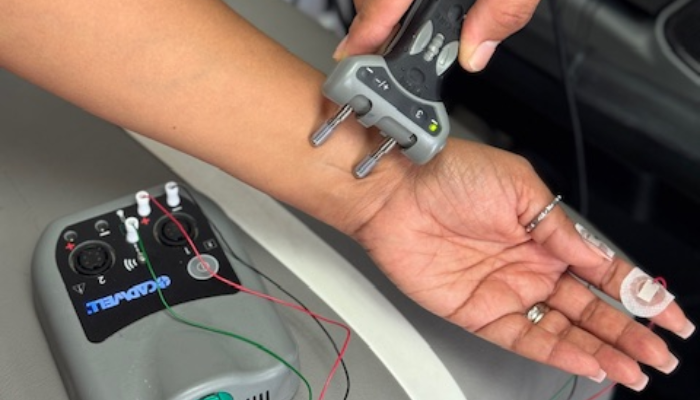
Nerve conduction studies (NCS), also known as nerve conduction velocity (NCV) tests, is a medical diagnostic test done to measure and evaluate nerve function. It evaluates how fast electrical signals move through your peripheral nerves.
Nerve conduction studies help diagnose issues with your peripheral nerves — mainly peripheral and nerve compression syndromes. They record how fast and efficiently your nerves respond. They can help determine the cause, severity, and prognosis of these conditions.
Electrodes are placed on the skin over the nerves and muscles. A small electrical impulse is sent through the nerve, which is then stimulated. The response is recorded to see how quickly and how strong the nerve conducts the signal.
This test is also interpreted by the neurologist.
The EMG and NCV are usually and should be performed together in one session.
Indications for EMG/NCS:
- Muscular dystrophy
- Myositis
- Myasthenia gravis
- Nerve damage
- Peripheral neuropathy
- Carpal tunnel syndrome
- Amyotrophic lateral sclerosis (ALS)
- Radiculopathy
- Herniated disc
- Sciatica
- Neck Pain/Back Pain
- Loss of function
- Numbness, Tingling Sensations
- Burning (feet) Sensation in Extremities
Electroencephalography (EEG)
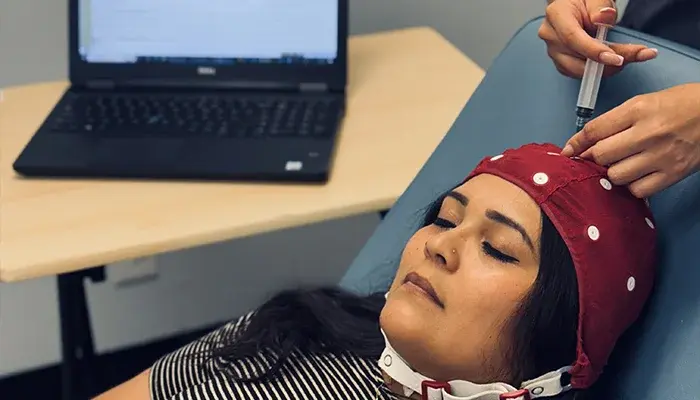
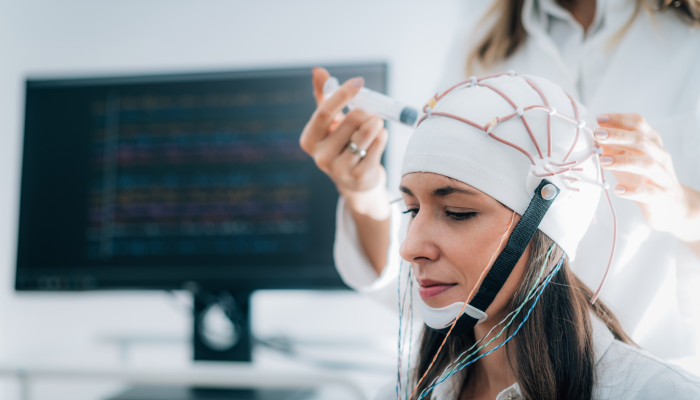
Electroencephalography (EEG) is a safe, painless, routine diagnostic test that measures and records the electrical activity of the brain. It does this by placing a cap with small metal electrodes on the scalp, to detect the tiny electrical signals produced by the brain cells as they communicate.
These signals are sent to a recording machine, which changes the signals into wave like patterns that can be seen on a monitor and interpreted by the neurologist.
The test takes anywhere from 30 to 120 minutes.
If you are experiencing any of the following symptoms you may be a good candidate for an electroencephalography (EEG).
What is an EEG used for?
- Diagnosing epilepsy and other seizure disorders
- Investigating causes of symptoms like confusion, memory issues, or unexplained loss of consciousness
- Monitoring brain activity during surgery or while in intensive care
- Studying sleep disorders or brain death
EEG are helpful in
- Epilepsy and other seizure disorders
- Brain tumors
- Head injuries
- Brain dysfunction due to various causes (encephalopathy)
- Inflammation of the brain (encephalitis)
- Strokes
- Sleep disorders, such as narcolepsy
- Dementia
- Headaches
- Psychiatric illnesses
- Degenerative brain diseases
- Brain death
Ambulatory Electroencephalogram (EEG)
Ambulatory Electroencephalogram (EEG) is a diagnostic test that records brain activity over an extended period usually 24 to 72 hours. The patient is connected to the EEG usually in a medical facility and typically goes about their normal daily activities outside of a hospital or clinic. Unlike a standard EEG, which is done in a medical setting for a short time, an ambulatory EEG captures longer-term brain wave patterns.
Key Advantages:
- Portable: The patient wears a small, portable recorder (usually attached to a belt, shoulder strap, or a small backpack), connected to electrodes placed on the scalp.
- Duration: It records continuously for 1–3 days or longer, depending on the doctor’s request.
-
Purpose:Used to diagnose or monitor conditions like:
• Epilepsy or seizures
• Unexplained episodes of confusion or fainting
• Sleep disorders - Advantages: It increases the chance of recording abnormal brain activity, especially if the events occur infrequently.
Join Our Online Community
Connect with Us on Social Media
Follow us to get important health information, updates, and tips directly from our experts. Stay informed and engaged with our practice.
Patient Testimonials